

Spinal Tumours
Spinal Tumours: At a Glance
What it is: A spinal tumour is an abnormal growth of cells within or around the spinal cord or its protective lining. Tumours may be benign or malignant, depending on whether they contain cancerous cells.
How it affects people: A tumour in or around the spinal cord can press on nearby nerves, soft tissue, or the spinal cord itself, leading to pain, weakness, or sensory changes.
Key concern: If left untreated, spinal compression may cause progressive nerve damage, reduced mobility, or, in severe cases, paralysis.
Diagnosis: Usually confirmed with MRI scans, sometimes supported by CT scans, neurological examination, or biopsy.
Treatment options: Observation, spinal surgery, or radiotherapy depending on tumour type, location, and symptoms.
Outlook: With early detection and expert care from a skilled neurosurgeon, most patients experience lasting relief and preserved function.
What is a Spinal Tumour?
A spinal tumour forms when abnormal cells grow inside the spinal canal or within bones and tissues supporting it. These primary spinal tumours can arise from the spinal cord, meninges, or nerve roots, while metastatic spinal tumours spread from other organs such as the breast, lung, or prostate.
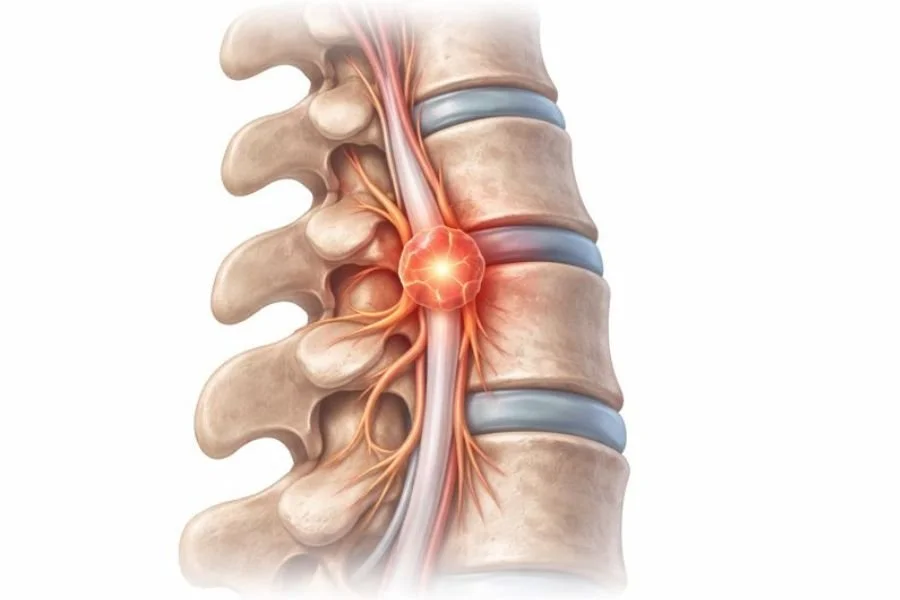
Types of Spinal Tumours
Spinal tumours are classified by location, which guides diagnosis and treatment.
-
Develop outside the spinal cord and its covering, often starting in the vertebrae. These are frequently metastatic spinal tumours from cancers in other parts of the body.
-
Grow inside the dura but outside the spinal cord. Common examples include meningiomas and nerve sheath tumours, which are usually benign spinal tumours.
-
Arise within the spinal cord itself, such as ependymomas, astrocytomas, or haemangioblastomas. These are a form of intramedullary disease, requiring specialist evaluation.
Understanding the tumour’s position helps determine the safest and most effective treatment.
Spinal Tumour Symptoms
Symptoms vary based on tumour size, type, and spinal region affected. They typically progress slowly.
Common signs of spinal tumour include:
Persistent or progressive back pain
Pain that worsens at night or when lying down
Vertebral tumour symptoms such as stiffness, weakness, or loss of sensation
Tingling or numbness in the arms or legs
Muscle weakness and loss of coordination
Difficulty walking or balancing
Bowel or bladder dysfunction in advanced cases
Seek immediate medical advice if you develop sudden weakness or loss of control of bladder or bowel function.
Causes of Spinal Tumours
Most spinal tumours arise without a known cause, but certain factors can increase the risk:
Genetic conditions such as neurofibromatosis or von Hippel–Lindau disease
Metastatic spinal tumours spreading from other sites
Previous radiation therapy
Family history of nervous system tumours
Getting a Diagnosis
Diagnosis combines clinical evaluation with advanced imaging and laboratory analysis. Tests may include:
MRI scans: The gold standard for assessing spinal cord tumours and surrounding structures.
CT scans: To detect bone or vertebral changes.
Neurological examination: Tests strength, reflexes, and sensory response.
Biopsy: Confirms if the tumour is benign or malignant.
A multidisciplinary team of neurosurgeons, neuroradiologists, and oncologists reviews all findings before recommending treatment.
Treatment Options for Spinal Tumours
Treatment depends on tumour type, growth rate, and patient health.
Observation & Monitoring
Small, benign spinal tumours that cause few symptoms may be monitored with periodic MRI scans.
Surgical Removal
When a tumour causes pain or instability, spinal surgery is often required. Microsurgical and minimally invasive techniques preserve nerve and soft tissue health while improving safety.
Radiotherapy & Radiosurgery
Used for tumours that cannot be fully removed or metastatic spinal tumours. Stereotactic radiosurgery precisely targets abnormal tissue while sparing healthy cells.
Medication & Supportive Care
Reserved for cases where conservative care fails or where nerves are severely compressed.
Treatment plans are personalised to each patient, ensuring the best outcome.
Mr Kailaya-Vasan is a consultant neurosurgeon specialising in specific spinal tumours. Recognised as one of the best neurosurgeons in London, he offers both surgical management and non-surgical approaches tailored to individual patient needs.
Living with a Spinal Tumour
Living with a spinal tumour can be physically and emotionally challenging, but effective treatment helps most patients regain independence. Rehabilitation improves mobility, while ongoing scans ensure early detection of recurrence or new growth.
Reducing Your Risk
Although spinal tumours can’t always be prevented, maintaining spinal health may help:
Maintain good posture and a healthy weight
Stay active with strength-based exercise
Avoid smoking, which can affect blood flow to the spine
Attend regular check-ups if you have a genetic condition or history of intramedullary disease
Book a consultation with Mr Ahilan Kailaya-Vasan
Receive a clear diagnosis and a tailored treatment plan from a leading consultant neurosurgeon. Appointments are available at top London hospitals, with remote options for international patients.
Seeking a second opinion?
If you have already received a diagnosis elsewhere, Mr Kailaya-Vasan can provide an independent review of your scans and medical notes, and explain the safest and most effective next steps.
FAQs about Spinal Tumours
-
Many spinal tumours are benign, but some are malignant or metastatic spinal tumours. A biopsy and imaging help determine type and severity.
-
Early spinal cord tumors symptoms include back pain, tingling, or weakness. Vertebral tumor symptoms such as stiffness or changes in balance may develop later.
-
No, many are benign, resulting from degenerative or inflammatory changes. However, persistent pain should always be investigated.
-
Most are deep-seated, causing internal pressure or radiating pain rather than a lump.
-
No, these growths develop beneath bone and muscle and typically cannot be felt externally.
-
An intramedullary tumour grows within the spinal cord and may be associated with intramedullary disease. Such tumours require delicate surgical planning by an experienced neurosurgeon in London.
-
Treatment may involve observation, targeted radiotherapy, or surgery. A neurosurgeon evaluates the best approach depending on tumour size and spinal location.
-
Recovery varies with the complexity and site of the tumour. Most patients resume light activity within weeks, with full recovery supported by physiotherapy.
If you have any further questions, please get in touch.